Risk and Uncertainty: How to Improve Your Cycling Race Analysis


Risk and Uncertainty: How to Improve Your Cycling Race Analysis
Analysing a cycling race is not just about knowing the riders and the route – it’s equally about understanding risk and uncertainty. Weather, crashes, tactics, and form can change the outcome within seconds. If you want to improve your ability to predict race results – whether for fun, fantasy leagues, or betting – you need to learn how to handle the many unknowns. Here’s a guide to help you strengthen your analysis by working systematically with risk and uncertainty.
Understand the Difference Between Risk and Uncertainty
Although the two words are often used interchangeably, they mean different things. Risk refers to events where you can estimate the probability – for example, a sprinter winning on a flat stage. Uncertainty, on the other hand, covers what you cannot predict – such as a sudden crash, a puncture, or a tactical surprise from a rival team.
When analysing a race, separate what you can calculate from what you can only estimate. This makes your analysis more realistic and helps you avoid overconfidence in your predictions.
Læs også:

Use Data – But With Context
Data is a powerful tool, but it can also create a false sense of security. Modern cycling produces vast amounts of information: power outputs, elevation profiles, weather data, and historical results. It’s tempting to believe that numbers tell the whole story – but they rarely do.
Use data as your foundation, but always combine it with context. A rider who performed well in a previous race might be fatigued after a long tour. A team strong in the mountains might struggle in crosswinds. Statistics are a guide, not a guarantee.
A useful approach is to work with scenarios: What happens if the wind changes direction? If the favourite crashes? If a team changes its strategy mid-race? Thinking in alternatives helps you better assess probabilities and consequences.
Identify the Key Uncertainties
Not all uncertainties matter equally. Some factors have a much greater impact on the race outcome than others. Ask yourself three questions when analysing a race:
- Which factors can most change the race dynamics? (e.g., wind, rain, route profile)
- Which riders are most affected by these factors?
- How can team tactics amplify or reduce uncertainty?
By focusing on the most influential uncertainties, you avoid drowning in details and can concentrate on what truly matters.
Think Like a Team – Not Just a Rider
Cycling is a team sport disguised as an individual competition. A rider may be in top form, but without team support, winning becomes difficult. When analysing risk, look at the team’s overall strength, role distribution, and strategy.
A team with multiple options – for example, both a sprinter and a climber – can spread risk and adapt to different race scenarios. A team relying solely on one leader faces higher risk if something goes wrong. The same applies to riders prone to crashes or mechanical issues – their individual risk is higher regardless of form.
Weather and Terrain – The Hidden Risk Factors
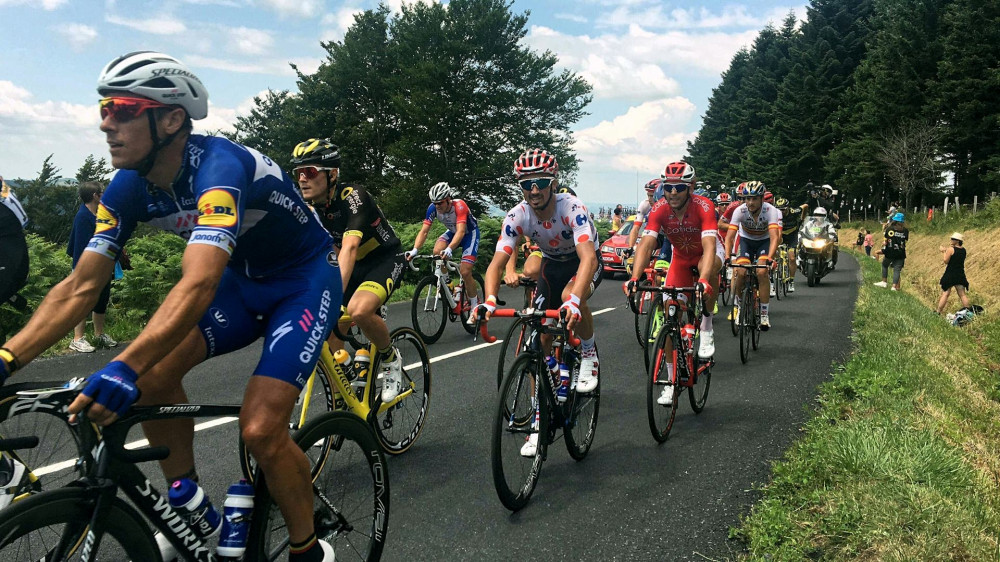
Weather is one of the most underestimated elements in cycling. Crosswinds can split the peloton, rain increases crash risk, and heat can drain energy faster than expected. Learn to read weather forecasts and understand how different conditions affect various rider types.
Terrain also plays a crucial role. A technical descent favours bold riders, while a long climb rewards those with steady power output. By combining knowledge of weather and terrain, you can better predict where the race is likely to be decided – and where unexpected events are most likely to occur.
In India, where cycling events often take place in diverse conditions – from the humid coasts of Kerala to the high-altitude roads of Himachal Pradesh – understanding local weather patterns and terrain is especially important. Monsoon rains, heat, and altitude can all shift the balance of risk dramatically.
Use Probabilities – Not Gut Feelings
Even the best analysts make mistakes, but the difference between a good and a poor analysis lies in how you handle them. Instead of thinking in terms of “winner” and “loser,” work with probabilities. What is the chance that a rider wins, finishes in the top three, or drops out?
By assigning numbers to your assessments – even rough ones – you force yourself to think more objectively. Over time, you can compare your estimates with actual results and refine your method. That’s how you improve.
Learn From Mistakes and Surprises
No analysis is perfect. The key is to learn from the times you were wrong. Ask yourself: Was it an unpredictable event, or did I miss a pattern? Maybe you underestimated a team’s tactics, or overestimated a rider’s form.
Keeping a record of your analyses and outcomes helps you gradually improve your ability to manage risk. The goal isn’t to eliminate uncertainty – that’s impossible – but to understand it better.
From Chance to Insight
Cycling will always contain an element of chance. That’s part of what makes the sport so captivating. But the better you become at analysing risk and uncertainty, the more you can distinguish between what’s random and what’s predictable.
By combining data, experience, and critical thinking, you can develop a more nuanced understanding of races – and perhaps gain an edge the next time you try to predict who will cross the finish line first.
Læs også: